Caro is one of the least formal games there is. It is played on notebook pages, on napkins, on phones, usually with a friend and often with a lot of laughter. There is no official etiquette book, and nobody expects one. Still, a few shared habits make games smoother and friendlier, especially when you are playing with Vietnamese friends for the first time. This article collects them.
Agree on the rules first
The single most useful habit is to agree on the rules before the first move. The key question is whether the Vietnamese custom chặn hai đầu applies: under it, a five blocked by the opponent at both ends does not win. Many Vietnamese players assume it by default; many players from elsewhere have never heard of it. A ten-second conversation before the game prevents the classic argument at the end.
Other things worth agreeing on in paper games: who moves first, how large the playing area is and whether the edge of the paper matters. On this site these are all fixed by the game setup: X moves first, the board is 15×15, and under the blocked ends rule the board edge never counts as a block. See the blocked ends custom.
Take turns promptly
Caro is a quick game, and part of its charm is its rhythm. Think when you need to, especially when the position is sharp, but do not leave your friend waiting for long stretches in simple positions. In online games with a clock the clock handles this; in games without one it is a matter of courtesy.
A mark is a mark
Once a mark is placed, it stays. Taking back moves in a casual game between friends is a matter for the two of you, but the common expectation is that a mark placed is final. On this site, games against the computer allow undo, while online games against people have no take-backs.
Make the win clear
On paper, a common habit is to draw a line through or circle the winning five so that both players can see it. It avoids disagreements about whether the line really has five and whether the ends are blocked. On a screen, the game detects the win automatically, so there is nothing to argue about.
Win and lose with good humour
Caro among friends is usually light-hearted. A bit of teasing after a missed diagonal is normal; gloating is not. The friendliest response to losing is simply chơi lại!, let's play again. The friendliest response to winning is to accept the rematch.
Letting the other person go first
In a series of games, many groups alternate who moves first, or let the player who just lost start the next game. Because the first player has an advantage, this keeps a series fair. On this site, a rematch after an online game automatically swaps sides.
Playing with children
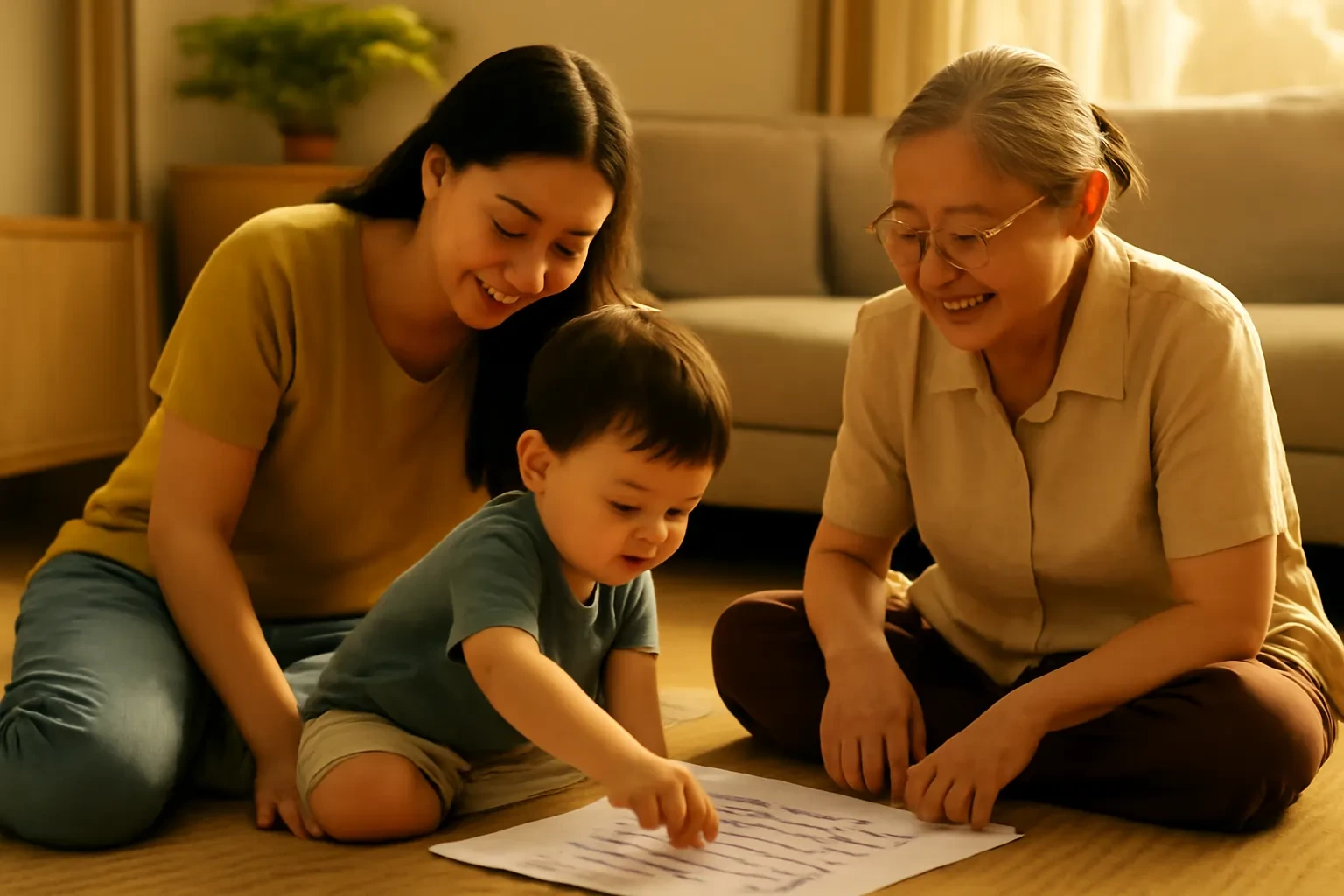
Children often learn caro from older siblings, parents or grandparents. Good habits when playing with a child:
- Keep games short and relaxed.
- Point out, after the game, where a line could have been blocked, rather than winning the same way repeatedly.
- Let them move first while they are learning.
- Praise good blocks and clever ideas, not just wins.
The goal is for the child to enjoy the game and keep playing, not to keep score.
Online manners
Online games on this site have no chat, which removes most sources of bad manners. The remaining courtesies are the same as in person: finish your games, play at a reasonable pace and accept results calmly. If you need to stop, resign or leave rather than simply closing the page. See fair play in online gomoku.
Watching other people play
Caro games in cafés and at school often attract onlookers. The polite habit for spectators is simple: watch, but do not point out moves. A friend leaning over the table to say "look at the diagonal!" can decide a game, and it is not fair to the other player. Save comments for after the game, when they are welcome.
Café and public spaces
Caro is often played in cafés, on park benches and in other shared spaces. A few courtesies help everyone enjoy it:
- Keep your voices at a comfortable level; celebrations can be enthusiastic without being loud.
- If you are using a café table for a long series of games, order something and make room when the café gets busy.
- Tidy up afterwards: napkins or paper sheets covered in X and O should end up in the bin, not on the table.
These are ordinary habits, but they keep caro welcome wherever people want to play.
When a disagreement happens
Even with the rules agreed, disagreements occasionally happen in paper games: was that mark inside the line? Was the end really blocked? The friendliest way out is to look at the page together, count slowly and, if still unsure, simply replay the last few moves or start a new game. A single game is never worth spoiling a friendship over. On a screen the question never arises, because the rules are applied automatically and the winning line is shown clearly.
Etiquette for teachers and club organisers
When caro is played in a class club or a youth group, a little structure helps: explain the rules at the start, pair players of similar experience, and keep sessions short. Encourage players to shake hands or say chơi lại nhé at the end of each game. Small rituals like these teach good sportsmanship without any lecture.
Respecting different traditions
Players from different backgrounds bring different habits. Someone who learned gomoku abroad may expect freestyle rules; someone who learned caro in a Vietnamese school may expect chặn hai đầu. Neither is wrong. The respectful approach is to ask, agree and enjoy the game. Trying the other person's rules for a few games is also a good way to learn something new about the game.
Frequently asked questions
What should we agree on before a caro game?
Mainly whether chặn hai đầu (blocked ends) applies, and who moves first.
Is it rude to take back a move?
Between friends it depends on what you agree, but the usual expectation is that a mark placed is final.
Who should move first in a series of games?
Many groups alternate or let the loser start the next game, because moving first is an advantage.
Is it acceptable to comment while watching someone else's game?
It is better not to point out moves during the game. Share your thoughts afterwards.
How should I play caro with a child?
Keep it short and fun, let them move first while learning, and explain missed blocks after the game rather than during it.