Some games divide generations: the grandparents do not understand the children's games, and the children find the grandparents' games slow. Caro is different. Its rules take a minute to explain, it needs only paper and a pen, and it is the same game a grandmother may have played decades ago and a child plays on a phone today. In many Vietnamese families, caro is simply there: a game someone suggests after dinner, during a holiday or while waiting for something. This article looks at why caro works so well across ages and how to keep family games enjoyable.
Why caro suits families
Caro has a rare combination of qualities:
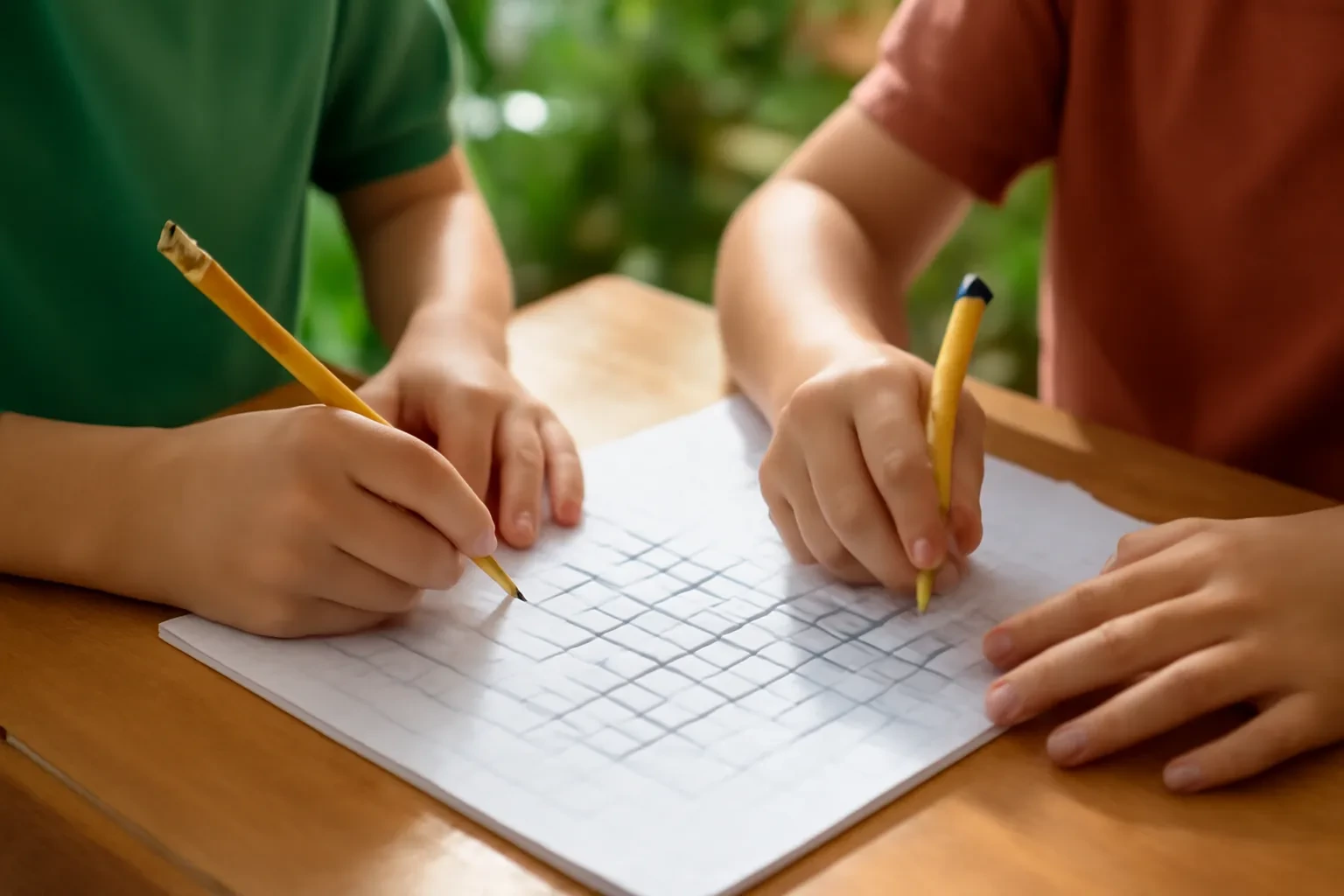
- Almost no equipment. Any squared page or scrap of paper will do. On a phone or tablet, the board is always ready.
- Rules anyone can learn. Take turns; five in a row wins. Children understand it immediately.
- Short games. A game fits into a few minutes, so nobody gets bored.
- Real depth. Adults can still enjoy thinking about double threats and careful blocks.
That means a seven-year-old and a seventy-year-old can play the same game, both enjoy it and both occasionally win.
Grandparents and grandchildren
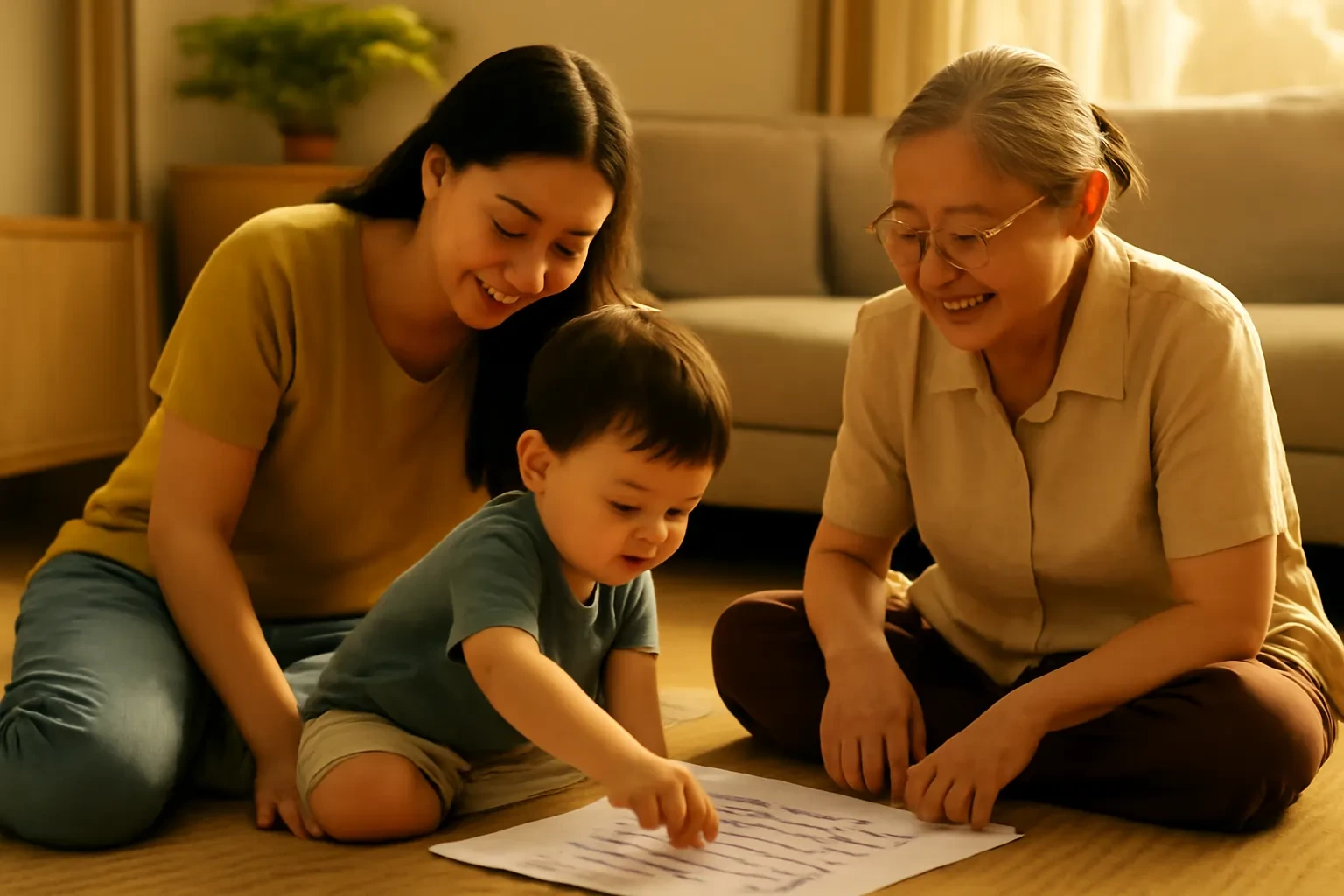
For grandparents, caro is often a game from their own school days, and teaching it to a grandchild is a natural way to spend time together. The pace is gentle, there is no complicated setup and the conversation can flow while the game goes on. Grandparents who are sharp at spotting lines often surprise grandchildren who assumed phones had taught them everything.
If grandparents and grandchildren live far apart, an invite link lets them play across cities: one person creates the game on the online page and sends the link through a messaging app; the other opens it and plays. Nobody needs an account.
Parents and children
For parents, caro is a low-pressure way to play with children that exercises thinking without feeling like homework. A few habits help:
- Let the child move first while they are learning, since moving first is an advantage.
- After a game, show where a line could have been blocked, rather than simply winning again.
- Praise good ideas: a clever block, a hidden diagonal, a patient defence.
- Keep games short and stop while everyone is still enjoying it.
Caro is not about keeping score in the family. The value is in the time together and in the small moments when a child discovers that looking carefully beats rushing.
Siblings
Between siblings, caro can become a lively rivalry. That is part of the fun, but it helps to keep it friendly: alternate who goes first, agree on the rules before starting and move on quickly after each game. Older siblings who teach younger ones often become better players themselves, because explaining a trap forces you to understand it.
Paper at home, screen on the move
Many families mix both. At home, a sheet of paper on the table makes the game social and tactile. On the move, a phone keeps the game going. On this site you can play the computer on the home page at four levels, which is useful for a child who wants to practise alone, and real people online. Under both, you can choose the Vietnamese blocked ends rule or freestyle.
Agreeing on the family rules
Families, like school groups, have their own habits. The main question is whether chặn hai đầu applies: under this custom, a five blocked by the opponent at both ends does not win. Settle it once and keep it consistent, so younger players are not confused. It is common in Vietnamese families, since it is how many people learned caro at school. See the blocked ends custom.
Caro during holidays and gatherings
Family gatherings often have long, unstructured stretches: waiting for a meal, sitting together after one, travelling between relatives. Caro fits these moments well. A sheet of paper passed around the table can host a small tournament between cousins, with the adults joining in or watching. Because a game takes only a few minutes, people can drift in and out without breaking anything.
On long journeys, two phones and an invite link let children in the back seat play each other quietly, which parents often appreciate. And when the family is spread across cities, a game over a link can be a small way of staying in touch between visits.
When interest fades
Children's interest in any game comes and goes. If a child loses interest in caro, there is no need to push. Leave the paper and pencils where they can be found, suggest a game now and then and let them come back when they want. Many people rediscover caro years later, often when they have children of their own.
Keeping it healthy
Caro is a screen-free game when played on paper, which is one of its advantages for families. When it is played on phones, the usual family rules about screen time apply. Short sessions, played together, are better than long solitary streaks.
A family caro evening
If you want to make caro a small family ritual, try this: after dinner once a week, play a short round-robin where everyone plays everyone once, with the youngest moving first in each game. Nobody keeps a table of results; the point is simply to play. Afterwards, each person shows their favourite move of the evening. It takes half an hour and often becomes a highlight of the week.
Passing the game on
Caro survives because it is passed on at the table, from one generation to the next, without instructions or equipment. A grandparent teaches a parent, a parent teaches a child, and one day that child teaches someone else. Keeping the game friendly and simple is the best way to make sure that chain continues.
Frequently asked questions
Why is caro a good family game?
It needs almost nothing, the rules are learned in a minute, games are short, and it still has depth for adults.
How can grandparents play with grandchildren who live far away?
Create a game on the online page and send the invite link. Neither player needs an account.
Should parents let children win?
It is better to let them move first and explain missed blocks after each game, so they improve and win on their own.
Which rules should a family use?
Choose whether to use the blocked ends custom and keep it consistent. It is common in Vietnamese families.
Can a child practise caro alone?
Yes. The computer on the home page has four levels, and the lower ones are gentle enough for beginners.